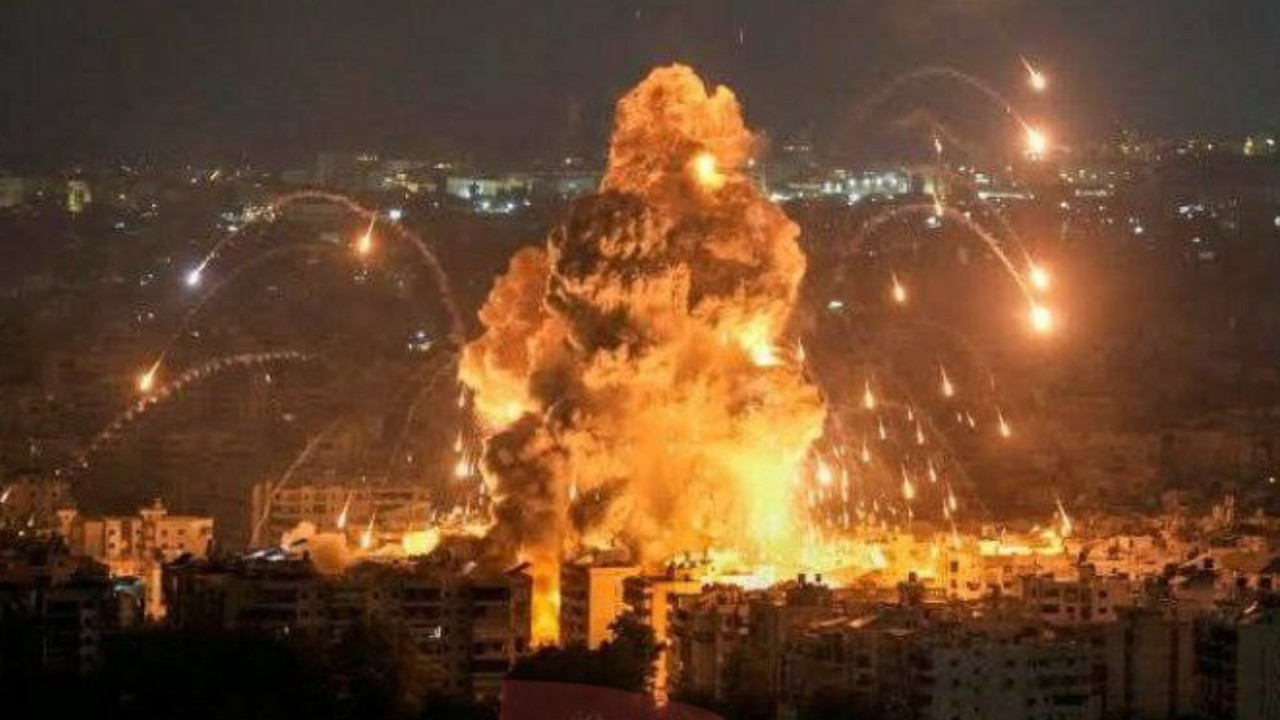
India achieved clear air superiority over Pakistan during ‘Operation Sindoor’ in May 2025. (Image X @abhinavchndra)
New Delhi: A new study report from a renowned Swiss military history and strategy think tank claims that India achieved clear air superiority over Pakistan during ‘Operation Sindoor’ in May 2025, which led to Islamabad pleading for a ceasefire within just four days. This conclusion comes from a detailed study published by the Center for Military History and Perspective Studies (CHPM), Switzerland. The report's author and military historian, Adrian Fontanellaz, presents the most comprehensive independent analysis to date of the 88-hour India-Pakistan air conflict that took place between May 7 and 10, 2025.
According to the report, international media focused excessively on the loss of one Indian Rafale fighter jet on the first night of the conflict, overshadowing the true strategic outcome. According to the Swiss analysis, this initial setback proved not to be a strategic defeat for India, but rather a turning point for subsequent decisive action. The report states that India systematically dismantled Pakistan's air defense and strike capabilities and dictated the terms of the ceasefire.
Operation Sindoor was launched after a brutal terrorist attack on tourists in Pahalgam, Jammu and Kashmir, which was linked to Pakistan-based terrorist organizations. On April 22, Pakistani terrorists killed 26 tourists in Pahalgam after asking about their religion and then shooting them. Following this incident, India's political leadership gave the armed forces a free hand to carry out a retaliatory strike that would be “sufficiently effective and deterrent” to prevent future terrorist attacks, even if it risked escalating tensions.
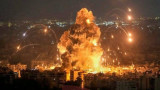
In the early hours of May 7, the Indian Air Force launched precision strikes on major terrorist bases linked to Jaish-e-Mohammed and Lashkar-e-Taiba. Key centers such as Bahawalpur and Muridke were targeted with long-range precision weapons, resulting in the complete destruction of several terrorist bases and buildings. According to the Swiss report, this attack was far more sophisticated in terms of depth, coordination, and technical level than previous Indian military responses.
The Swiss think tank report states that Pakistan responded to the Indian attack with an aggressive air response. The first night witnessed one of the largest air battles in decades, involving approximately 60 Indian aircraft and more than 40 Pakistani fighter jets. With the help of Chinese PL-15 long-range air-to-air missiles and airborne early warning systems, the Pakistan Air Force inflicted some damage on the Indian Air Force. According to the report, India reportedly lost one Rafale, one Mirage-2000, and another aircraft. However, Swiss analysts say this phase was a setback for India at the information and perception level, not a decisive turning point in the war.
Following this, the Indian Air Force changed its strategy and focused on suppressing enemy air defenses (SEAD/DEAD). Through stand-off cruise missiles like SCALP-EG and BrahMos, multi-directional attacks, and coordinated pressure, Pakistan's surface-to-air missiles and radar networks were progressively neutralized. Also read: LIVE: Glimpses of Operation Sindoor on Kartavya Path, the whole world witnessed India's prowess
The think tank stated in its report that as soon as the enemy's air defenses weakened, India launched "brilliant and precise" attacks on Pakistan's key airbases. Runways, hangars, logistics, and support infrastructure were targeted, virtually crippling the operational capability of the Pakistan Air Force. The report specifically praised India's Integrated Air Defence and Command System. The IACCCS network, the Army's AkashTeer system, and layered air defense systems like Akash, Barak-8, and S-400 largely thwarted Pakistani counterattacks. The Swiss study calls this the biggest surprise of the conflict.
The report states that by May 10, the situation had completely changed. Pakistani airbases were under pressure, air defenses had weakened, and it was no longer in a position to challenge the Indian Air Force. According to the report, it was during this phase that India achieved true air superiority and gained the ability to dictate the pace and scope of the operation. Immediately afterward, Pakistan repeatedly requested a ceasefire.
The Swiss think tank concludes that Operation Sindoor is a decisive turning point in India's military and strategic policy. Now, India will consider future Pakistan-based terrorist attacks not merely as actions by non-state actors, but as state-sponsored aggression, and the response will be swift, comprehensive, and decisive.


Copyright © 2026 Top Indian News